Types of Data Centers Cleaning
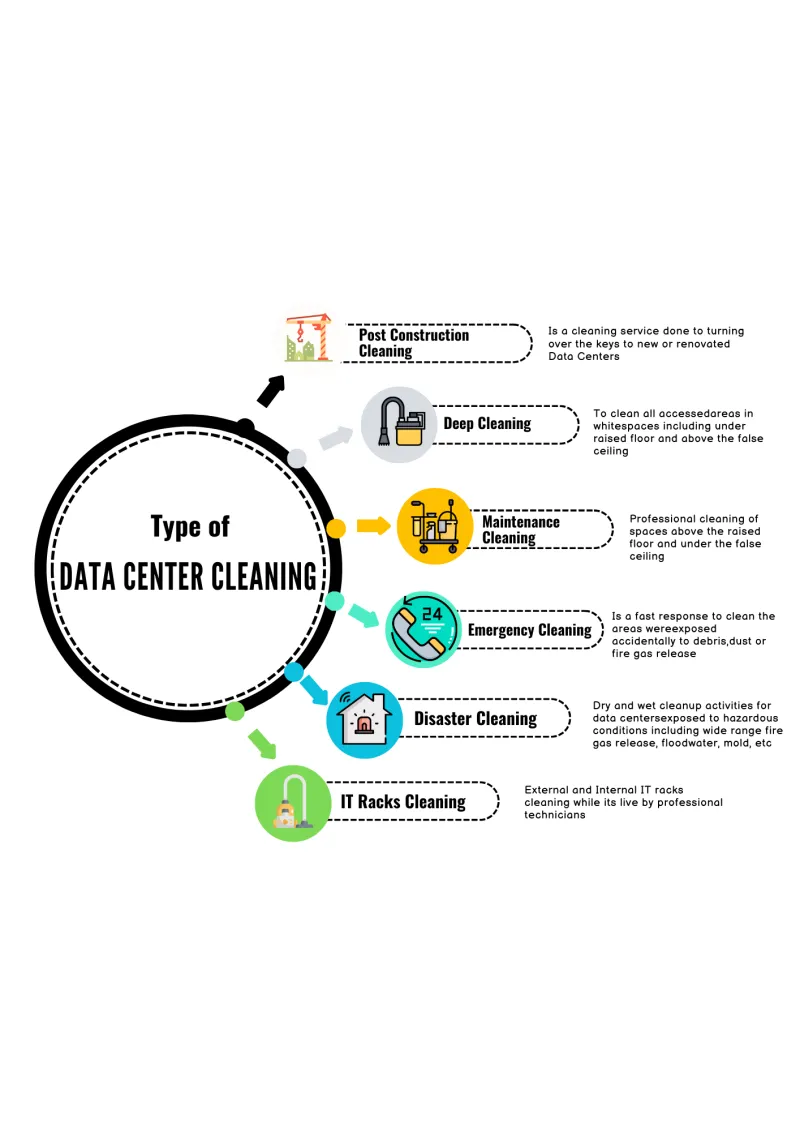
Data center cleaning falls into six types: post-construction, deep, maintenance, emergency, disaster and IT rack cleaning.
Key takeaways
- Data center cleaning falls into six types: post-construction, deep, maintenance, emergency, disaster and IT rack cleaning.
- When an owner asks for "a deep clean" and the contractor prices a maintenance clean, both sides find out on site.
- The plenum is not in the scope, the ceiling void is not in the scope, and the ISO 14644-1 test fails a week later.
- A cleaning service performed when the keys of a new or renovated data center are handed over.
6 Types of Data Center Cleaning and When You Need Each
Data center cleaning falls into six types: post-construction, deep, maintenance, emergency, disaster and IT rack cleaning. Each one has a different scope, a different trigger and a different team, and mixing them up is the most common reason a cleaning contract goes wrong.
The definitions below are mine. There is no international standard that names the types of data center cleaning, so owners, consultants and cleaning teams often use the same word for different jobs. A shared vocabulary solves that before the first tile is lifted.
Why do the definitions matter?
When an owner asks for "a deep clean" and the contractor prices a maintenance clean, both sides find out on site. The plenum is not in the scope, the ceiling void is not in the scope, and the ISO 14644-1 test fails a week later.
Writing the type into the purchase order, with its scope, avoids that argument. It also tells the team which tools, permits and people to bring. More on what shapes the plan is in what can affect the data center cleaning plan.
What are the six types of data center cleaning?
1. Post-construction cleaning
A cleaning service performed when the keys of a new or renovated data center are handed over. It removes construction dust, cement and gypsum residue, metal swarf from cutting and drilling, and packaging debris from every surface, including the plenum, ceiling void, cable trays and racks.
It is the heaviest clean a site will see, and it usually ends with an ISO 14644-1 test to show the room meets ISO Class 8, the level the ASHRAE TC 9.9 guidelines set for data centers.
2. Deep cleaning
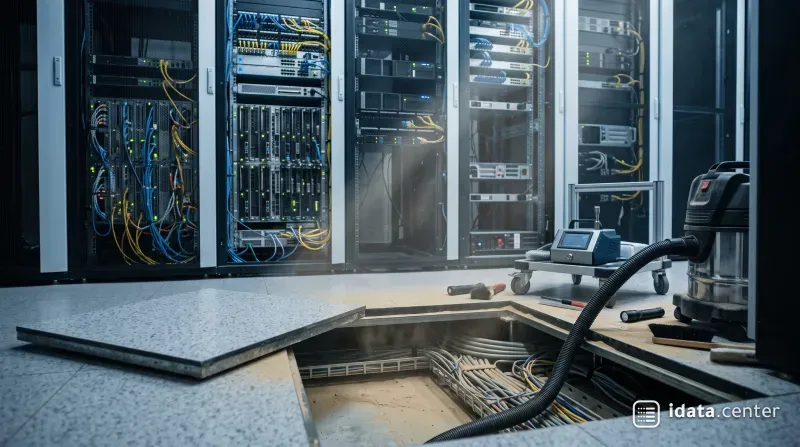
Cleaning of all accessible areas in the white space, including under the raised floor and above the false ceiling. Floors, plenum, pedestals, cable trays, ceiling void, rack exteriors and the faces of cooling units are all in scope.
3. Maintenance cleaning
Professional cleaning of the spaces between the raised floor and the false ceiling: floor tile surfaces, rack exteriors, doors, frames and other visible surfaces. It keeps the room stable between deep cleans and does not open the plenum or ceiling void.
4. Emergency cleaning
A fast response to clean areas that were accidentally exposed to debris, dust or a fire suppression gas release. Typical triggers are an unplanned drilling job, a failed filter, a burst bag of debris or a ceiling tile that dropped. The aim is to contain and remove the contamination before it spreads through the cooling air.
5. Disaster cleaning
Dry and wet clean-up of a data center exposed to hazardous conditions, such as fire and smoke residue, flood water or mould. It needs specialist assessment before any work starts, and often involves the equipment manufacturer, the insurer and health and safety specialists.
6. IT rack cleaning
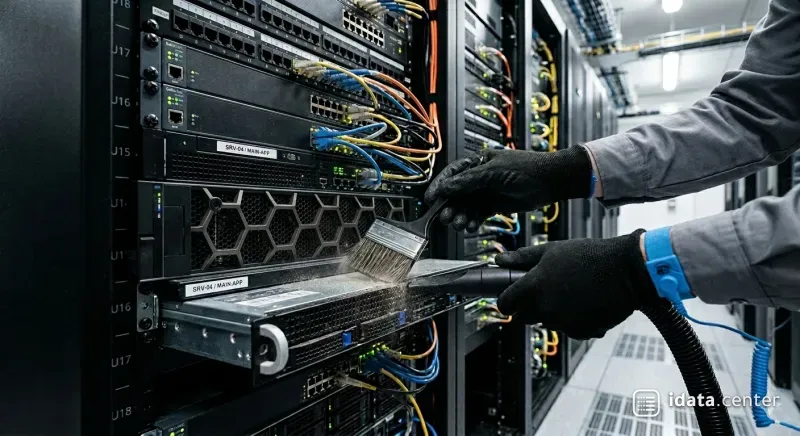
External and internal cleaning of IT racks while they are live, carried out by trained technicians. It covers rack doors, frames, blanking panels, cable management and the outer faces of equipment, using ESD-safe tools and HEPA vacuums. The method is described in a practical guide to cleaning active IT cabinets.
How do the six types compare?
|
Type |
Trigger |
Scope |
Typical frequency |
|
Post-construction |
Handover of new or renovated space |
Everything, floor to ceiling void |
Once, at handover |
|
Deep |
Planned |
Plenum, white space, ceiling void |
Once a year |
|
Maintenance |
Planned |
Floor surface to ceiling |
Monthly or quarterly |
|
Emergency |
Incident |
The affected area and its airflow path |
As needed, same day |
|
Disaster |
Fire, smoke, flood, mould |
Whole site after assessment |
As needed |
|
IT racks |
Planned |
Rack exterior and interior, live |
Once or twice a year |
Which type do you need?
Start with the trigger. A handover calls for post-construction cleaning. An incident calls for emergency or disaster cleaning. Everything else is planned work: maintenance cleaning keeps the room steady, deep cleaning resets it, and IT rack cleaning deals with what collects inside the cabinets.
If you are unsure, test first. An ISO 14644-1 air test, with the right number of sample locations, and a look under a few floor tiles will show whether a maintenance clean is enough or the room needs a deep clean. The plenum side is covered in raised floor tile cleaning, and dust control during works in drilling inside data centers.
Name the type in the contract, list its scope, and agree the test that closes the job. That one line saves more arguments than any other clause.
Note: The above definitions are not worldwide standards, am trying to have a unified definitions as a standard of data center cleaning types, this would solve misunderstanding between the DC owners and the DC Cleaning Teams
Frequently asked questions
What are the six types of data center cleaning?
What is the difference between maintenance cleaning and deep cleaning?
When should you perform post-construction cleaning?
What triggers an emergency cleaning service?
How can you determine if you need a maintenance or deep clean?
Subscribe to new articles
Get new articles by email. No spam, unsubscribe any time.
© 2026 Ashraf Almuhtaseb | idata.center | All rights reserved