Using Cleaning Liquids Inside Data Centers
When cleaning a data center, it's essential to use cleaning liquids that are safe for sensitive electronic equipment, non-conductive, and non-corrosive.
Key takeaways
- Use 70% isopropyl alcohol on a lint-free or microfiber cloth for cleaning data center equipment and rack surfaces.
- Apply cleaning liquids to a cloth rather than spraying them directly onto equipment to prevent moisture from entering intakes.
- Avoid using bleach, peroxides, ammonia, ethyl alcohol, acetone, or abrasive cleaners, as these can damage hardware and leave harmful residues.
- Clean raised floor tiles using a diluted pH-neutral cleaner with a damp mop, ensuring no liquid enters tile joints or the plenum.
Which Cleaning Liquids Are Safe Inside a Data Center?
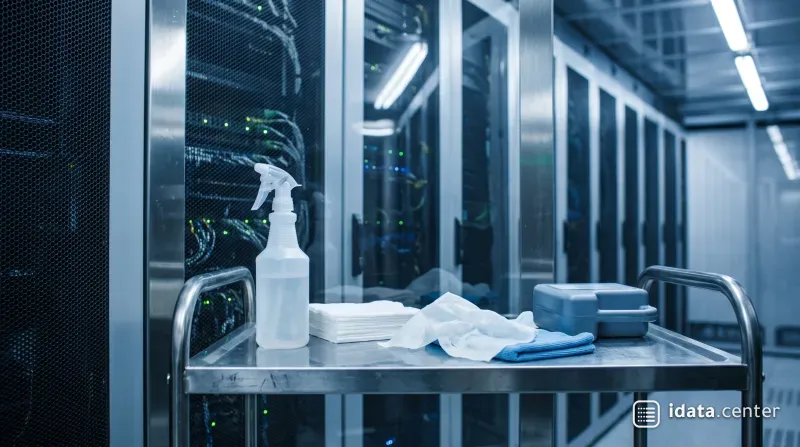
Inside a data center, use 70% isopropyl alcohol (IPA) on a microfiber or lint-free cloth for equipment and rack surfaces, and a mild pH-neutral cleaner, used sparingly, for floors. Dell's guidance for servers, storage and networking gear recommends exactly this IPA mix and warns against bleach, peroxides, ammonia, ethyl alcohol and solvents such as acetone.
The rule behind both choices is the same: the liquid must clean without leaving residue, without adding moisture to live equipment and without building static.
My personal advice: Use 90% isopropyl alcohol (IPA) on a microfiber or lint-free cloth for device surfaces inside cabinets, and 70% concentration for other surfaces in general.
What makes a cleaning liquid safe for a data center?
A safe product for the white space should:
- Evaporate fully and leave no film that holds dust.
- Not be conductive once dry, and not corrode metal or plastic.
- Not release strong vapours near equipment intakes.
- Be used in small amounts, applied to a cloth, never sprayed on equipment.
Household cleaners usually fail at least one of these points. Many contain ammonia, fragrances or surfactants that leave a sticky film, and most are made to be used wet.
What does Dell recommend for enterprise equipment?
Dell's guidance for keeping its equipment clean has a separate section for enterprise systems, which covers storage, networking, servers and data center equipment. Its key points:
- Dell recommends using a professional cleaning company that specialises in data center equipment.
- If you clean in-house, limit the work to external surfaces. Do not open cabinet or chassis doors to clean internal parts.
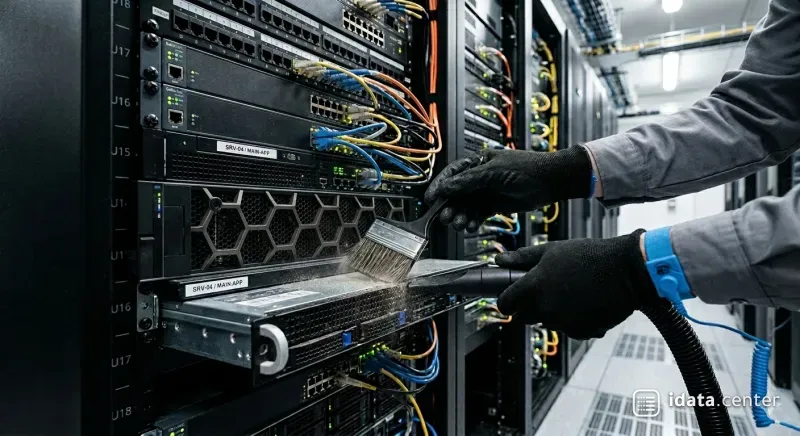
- Use a microfiber cloth with 70% isopropyl alcohol by volume. Never spray liquid onto or into the product.
- If the equipment must stay running, take extreme care with moisture near powered hardware.
- Do not remove fibre optic cables for general cleaning.
Which liquid should you use where?
|
Surface |
Liquid |
How to apply |
|
Server fronts, rack doors and frames |
90% IPA, 10% water |
Dampen a lint-free or microfiber cloth, wipe, let it air-dry |
|
Blanking panels and cable managers |
70% IPA |
Cloth only, light pressure |
|
Raised floor tile tops |
pH-neutral floor cleaner, diluted |
Damp (not wet) mop, after HEPA vacuuming |
|
Glass doors and screens |
70% IPA or an ammonia-free glass cleaner |
On the cloth, never sprayed near racks |
|
Walls, frames and structure |
pH-neutral cleaner, diluted |
Damp cloth, away from equipment |
|
Inside live equipment |
None |
Not cleaned with liquid. Dry methods only, if approved |
Anti-static cleaners
Anti-static sprays made for electronics and cleanrooms leave a thin layer that reduces charging on plastic and laminate surfaces. Use them on the cloth, not sprayed into the air, and check that the product is rated for use around live equipment. The wider ESD method is in what is ESD cleaning in data centers.
pH-neutral floor cleaners
Mild, pH-neutral detergents suit raised floor tiles, walls and structure. Dilute them as the maker says and mop with a damp, not wet, head. Water that runs into tile joints ends up in the plenum. The full floor method is in raised floor tile cleaning.
What should you never use?
- Bleach and chlorine cleaners. Dell lists them as harmful to its equipment.
- Peroxides, including hydrogen peroxide. Also on Dell's avoid list.
- Ammonia-based cleaners, including many glass sprays. They can damage surfaces and leave residue.
- Ethyl alcohol and solvents such as acetone. Dell warns against both.
- Abrasive powders and creams. They scratch finishes and leave grit.
- Oil-based polishes. The film they leave attracts dust.
- Anything sprayed directly. Mist travels into vents and intakes.
Best practices for liquids in the white space
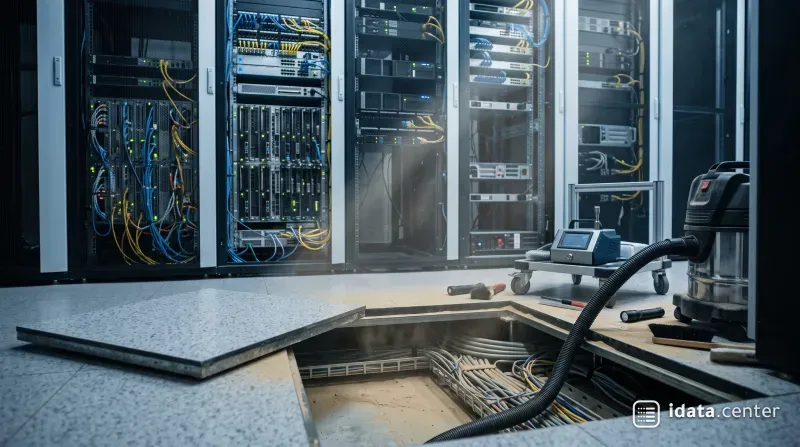
- Vacuum with a HEPA vacuum first. Liquid on dusty surfaces turns dust into mud.
- Apply liquid to the cloth, never to the equipment.
- Use lint-free, anti-static wipes and change them often.
- Test any new product on a small, hidden area first.
- Keep the room ventilated and keep containers closed when not in use.
- Let surfaces dry fully before closing doors or replacing tiles.
- Keep the product data sheet (SDS) for every liquid on site.
Wear gloves and eye protection when handling IPA, as described in what to wear for technical cleaning, and keep IPA away from heat sources. For work inside cabinets, follow cleaning active IT cabinets.
Less liquid is almost always better. A damp cloth with 70% IPA cleans most surfaces in a data hall, and nothing should ever be wet enough to drip.
Frequently asked questions
What cleaning liquids are safe to use on data center equipment?
What cleaning products should be avoided in a data center?
What is the proper way to apply cleaning liquids to data center hardware?
What should be used to clean raised floor tiles in a data center?
Are anti-static cleaners safe for data center use?
Subscribe to new articles
Get new articles by email. No spam, unsubscribe any time.
© Ashraf Almuhtaseb | idata.center. Short quotes are welcome with credit and a link to this article. Republishing the full article requires written permission.