What to Wear When Doing Technical Cleaning Inside Data Centers?
The clothing worn while cleaning inside a data center is critical to maintaining a clean, static-free, and safe environment. The goal is to minimize contamination

Key takeaways
- Data center technicians must wear low-linting anti-static coveralls or smocks to prevent fiber shedding and static buildup.
- Data halls maintain ISO 14644-1 Class 8 standards to prevent fibrous dust from fouling heat sinks and disrupting cooling systems.
- Technicians working inside IT racks are required to wear a grounded wrist strap connected to a known ground point.
- Materials like cotton, wool, and fleece must be avoided because they shed fibers and generate electrostatic charges.
What to Wear for Technical Cleaning Inside a Data Center
For technical cleaning in a data center, wear a low-linting anti-static coverall or smock, ESD-safe footwear or shoe covers, a hair cover, powder-free gloves and, when you work inside racks, a grounded wrist strap. The clothing has two jobs: keep your own fibres and skin particles out of the room, and keep static charge off the equipment.
Ordinary work clothes fail at both. Cotton sheds fibres, and synthetic fabrics build up charge as you move.
Why does clothing matter in a data hall?
A data hall is kept to ISO 14644-1 Class 8, as set in the ASHRAE TC 9.9 particulate guidelines. ASHRAE warns that fibrous dust from textiles can foul heat sinks and disrupt cooling. A cleaner in street clothes is a source of exactly that.
Static is the second concern. ANSI/ESD S20.20, the main standard for ESD control programs, is written to protect parts that can be damaged by a discharge of 100 volts on the human body model. You will not feel a discharge that small.
What should a cleaning technician wear?
Anti-static coverall or smock
Use a coverall or smock with conductive fibres woven into the fabric. A full coverall suits subfloor and ceiling work, where you kneel and reach. A long-sleeved smock or lab coat is enough for light surface cleaning. Sleeves should reach the wrist, so bare forearms do not rub against racks.
Low-linting fabric
Choose garments made for controlled environments, usually polyester with a carbon grid. They shed far fewer fibres than cotton. Wash them separately and keep them bagged until you change on site.
Hair cover
A bouffant cap or hood keeps hair and skin flakes out of the air. Beards need a beard cover when you work close to open equipment.
Gloves
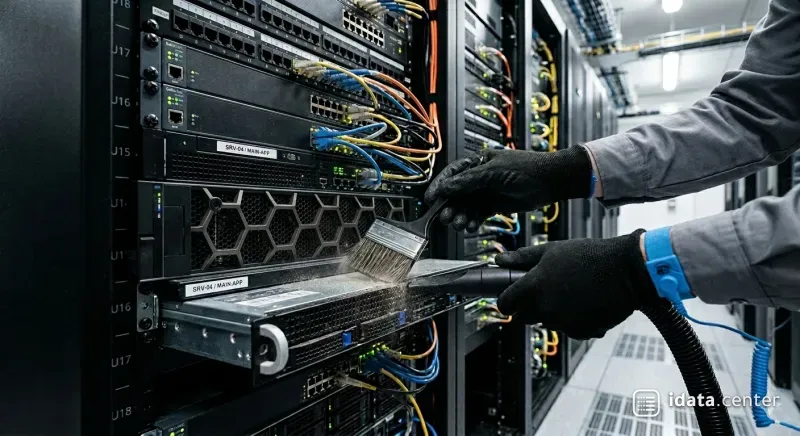
Powder-free nitrile gloves keep skin oils and salts off surfaces and protect your hands from cleaning liquids. Powdered gloves leave residue. For work inside racks, ESD-rated gloves or finger cots add a safe path for charge.
Grounded wrist strap
When you work inside an IT rack, wear a wrist strap connected to a known ground point, such as the rack's grounding stud. The strap must sit against bare skin. Test it before you start, and never remove it while your hands are inside the rack.
ESD footwear or anti-static shoe covers
On ESD flooring, conductive footwear or heel straps keep you grounded as you walk. Anti-static shoe covers with a conductive strip do the same job if the strip touches your skin. More on choosing covers is in shoe covers in data centers.
What PPE do you need for each task?
|
Task |
Clothing |
Extra protection |
|
White space floors and rack exteriors |
Anti-static smock, hair cover, shoe covers, nitrile gloves |
None |
|
Inside live racks |
Anti-static coverall or smock, ESD gloves |
Grounded wrist strap, tested before use |
|
Raised floor plenum |
Anti-static coverall, hair cover, gloves |
Knee pads, dust mask, torch |
|
Ceiling void and work at height |
Anti-static coverall, hair cover, gloves |
Safety glasses, dust mask, harness where required |
|
Emergency or disaster clean-up |
Disposable coverall, gloves |
Respirator and eye protection after a safety assessment |
Note: the extra protection column is a general proposal. Adjust it to your site safety rules and to your own practice, especially the respirator type for disaster work.
For work above floor level, the equipment rules are covered in climbing safely with A-type ladders and scissor lifts.
What should you avoid?
- Cotton, wool and fleece. They shed fibres and, with synthetics, build charge.
- Loose items. Lanyards, scarves, loose sleeves and jewelry catch on cables and can fall into equipment.
- Dirty garments. Bring clothing clean and bagged. Never put on a coverall that was used on another site without washing.
- Ungrounded straps. A wrist strap clipped to nothing gives a false sense of safety.
Key points before entering the data hall
- Change into clean garments outside the white space.
- Fit hair cover, then coverall, then gloves, then shoe covers.
- Test your wrist strap and footwear at the tester, if the site has one.
- Cross the sticky mats and enter.
ESD control is a system: clothing, footwear, flooring and wrist straps all work together. The wider method is described in what is ESD cleaning in data centers, and the tools in HEPA vacuums inside data centers.
Dress for the room, not for the job you would do in an office. It takes five minutes and protects equipment worth far more than the clothing.
Frequently asked questions
What type of clothing should be worn for technical cleaning in a data center?
Why should you avoid wearing ordinary work clothes like cotton or fleece?
When is a grounded wrist strap required?
What kind of gloves should cleaning technicians use?
What personal protective equipment is needed for working inside live racks?
Subscribe to new articles
Get new articles by email. No spam, unsubscribe any time.
© Ashraf Almuhtaseb | idata.center. Short quotes are welcome with credit and a link to this article. Republishing the full article requires written permission.